
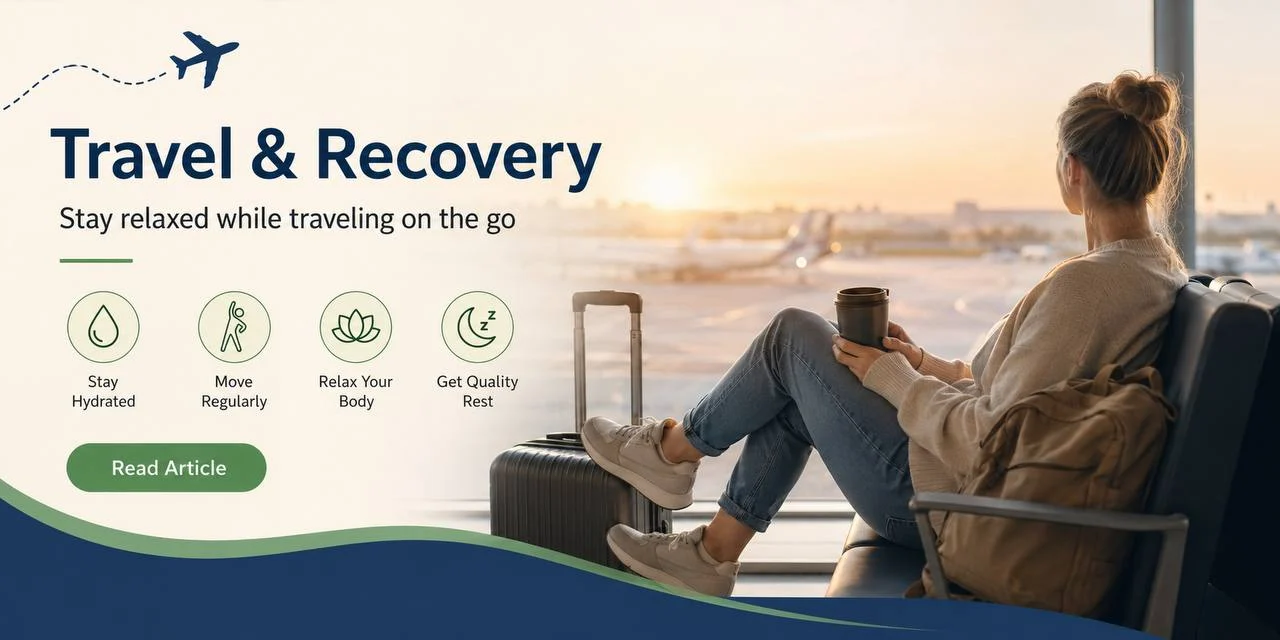
7 Travel Recovery Tips for Comfortable Trips
- TootivaCare
Travel Recovery Tips can help you stay comfortable, reduce muscle tension, and feel more energized during and after long trips. Whether you travel by plane, car, or train, these simple recovery strategies can make your journey more enjoyable.
Traveling can be exciting, whether you’re heading on vacation, visiting family, or traveling for work. However, long hours sitting in a car, airplane, train, or bus can leave your body feeling stiff, tired, and uncomfortable. Many people experience neck pain, shoulder tension, back aches, swollen feet, and overall fatigue after a long journey.
The good news is that with a few simple habits and the right recovery techniques, you can stay comfortable during your trip and help your body recover faster afterward. In this article, we’ll explore practical tips that anyone can use to make travel more enjoyable and less stressful on the body.
Following simple Travel Recovery Tips can help reduce muscle stiffness after long trips.
Travel Recovery Tips for Long Trips
Travel Recovery Tips are essential for frequent travelers who want to stay comfortable and energized.
When we travel, our normal routines change. We often sit for long periods, sleep in different environments, carry heavy bags, and experience changes in stress levels.
Common travel-related discomforts include:
- Neck and shoulder tension
- Lower back pain
- Muscle stiffness
- Leg fatigue
- Poor circulation
- Headaches
- Stress and anxiety
- Sleep disruption
Even healthy individuals can feel these effects after a long trip. That’s why recovery should be an important part of every travel experience.
Stay Hydrated Throughout Your Journey
One of the simplest ways to support your body during travel is to drink enough water.
Many travelers become dehydrated without realizing it. Airplane cabins, long road trips, and busy schedules can make it easy to forget about hydration.
Benefits of staying hydrated include:
- Better energy levels
- Improved circulation
- Reduced headaches
- Better muscle function
- Less fatigue
Try carrying a reusable water bottle and sip water regularly throughout your trip.
Move Whenever Possible
Sitting in one position for hours can cause stiffness and discomfort.
Whether you’re traveling by car or plane, make an effort to move your body regularly.
Simple travel movements include:
- Standing up and stretching
- Rolling your shoulders
- Rotating your neck gently
- Walking down the aisle on a flight
- Taking short walking breaks during road trips
Even a few minutes of movement every hour can make a noticeable difference.
Support Your Neck and Back
Poor posture is one of the biggest causes of travel-related pain.
Many people lean forward while using their phones, sleep in awkward positions, or sit without proper back support.
To improve comfort:
- Use a travel pillow for neck support
- Sit with your back against the seat
- Keep both feet flat when possible
- Avoid looking down at your phone for long periods
- Adjust your seat to support your lower back
Maintaining good posture helps reduce strain on your muscles and joints.
Pack Smart and Avoid Overloading
Heavy luggage can place unnecessary stress on your shoulders, neck, and back.
When packing:
- Choose lightweight luggage
- Use backpacks with padded straps
- Distribute weight evenly
- Avoid carrying heavy bags on one shoulder
- Use rolling luggage whenever possible
Small adjustments can help prevent soreness before your trip even begins.
Prioritize Sleep During Travel
Sleep is one of the most powerful recovery tools available.
Travel often disrupts sleep schedules, especially when crossing time zones or staying in unfamiliar places.
Travel Recovery Tips for Better Sleep:
- Bring an eye mask
- Use earplugs if needed
- Avoid excessive caffeine late in the day
- Maintain a regular bedtime when possible
- Create a comfortable sleeping environment
Getting quality sleep helps your muscles recover and keeps your energy levels higher throughout your trip.
Travel Recovery Tips for Muscle Recovery
Use Heat Therapy for Muscle Relaxation
Heat is a simple and effective way to relax tight muscles.
Many travelers experience tension in the neck, shoulders, and upper back after long periods of sitting.
Heat therapy may help:
- Improve circulation
- Relax muscles
- Reduce stiffness
- Increase comfort after travel
A warm shower, heating pad, or portable heat therapy device can be useful after a long day of traveling.
Try Gentle Stretching After Arrival
When you finally reach your destination, your body may feel stiff from sitting for hours.
Gentle stretching can help restore mobility and reduce discomfort.
Focus on stretching:
- Neck muscles
- Shoulders
- Chest
- Lower back
- Hamstrings
- Calves
Spend five to ten minutes stretching after arrival to help your body feel refreshed and ready for your next activity.
Recovery Matters After the Trip
Many people focus on getting through the journey but forget about recovery afterward.
Recovery is important because it allows your body to return to its normal state and helps reduce lingering discomfort.
Simple recovery habits include:
- Drinking water
- Taking a short walk
- Stretching
- Using heat therapy
- Getting adequate sleep
- Practicing relaxation techniques
These habits can help you feel better faster and enjoy your destination more.
Portable Wellness Solutions for Travelers
Modern wellness products make recovery easier than ever.
Portable massage devices and relaxation tools can help travelers relieve tension wherever they go.
Benefits may include:
- Temporary muscle relaxation
- Increased comfort
- Convenient use during travel
- Easy portability
- Support for daily wellness routines
These tools can be especially useful for people who travel frequently for work or spend long hours on the road.
Managing Travel Stress
Travel is not only physically demanding—it can also be mentally exhausting.
Flight delays, traffic, busy schedules, and unexpected changes can create stress and anxiety.
To stay calm:
- Take slow, deep breaths
- Plan ahead when possible
- Give yourself extra travel time
- Listen to relaxing music
- Focus on enjoying the journey
Reducing stress can have a positive effect on both your physical and mental well-being.
Final Thoughts
Many people use Travel Recovery Tips to improve their travel experience and overall wellness.
Travel should be an enjoyable experience, not one that leaves you feeling exhausted and uncomfortable. By staying hydrated, moving regularly, maintaining good posture, stretching, prioritizing sleep, and using simple recovery techniques, you can help your body stay comfortable throughout your journey.
Remember that recovery is just as important as the trip itself. Taking a few minutes to care for your body can make a big difference in how you feel both during and after travel.
Safe travels, and don’t forget to make relaxation and recovery part of every adventure.
Follow Us for More Wellness Articles at Shop – TootivaCare
Looking for more tips on relaxation, recovery, wellness, and everyday self-care?
Follow TootivaCare for more helpful articles, wellness guides, and recovery tips designed to help you feel your best every day.
For additional travel health information, visit Travelers’ Health | CDC