
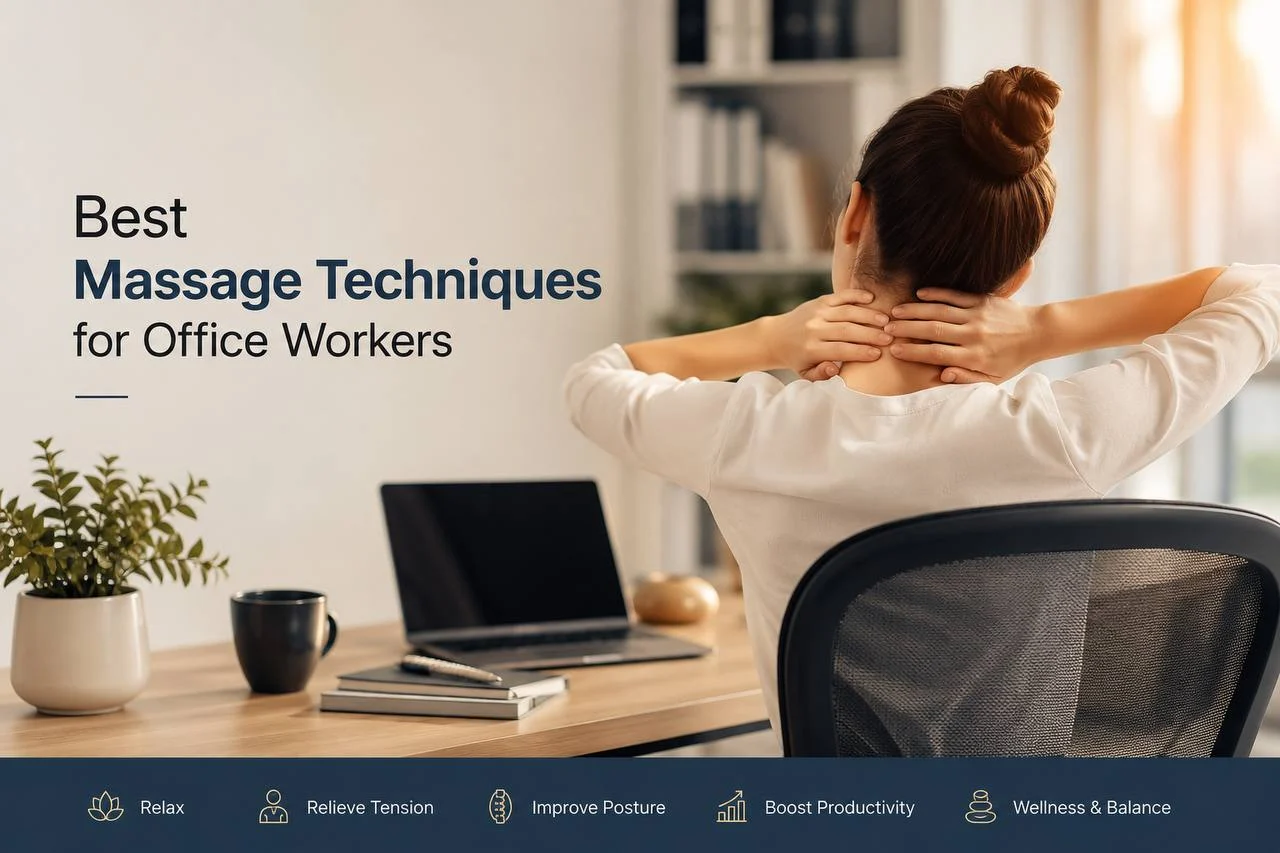
Best Massage Techniques for Office Workers | Neck Pain Relief
- TootivaCare
Discover the best massage techniques for office workers to relieve neck pain, shoulder tension, stress, and muscle fatigue naturally.
Modern office life may look physically easy but sitting for long hours behind a desk places tremendous stress on the body. Tight shoulders, stiff neck muscles, lower back pain, headaches, wrist discomfort, and poor posture have become extremely common among office workers. Whether you work from home or in a traditional office environment, daily stress and repetitive movements can slowly affect both physical and mental health.
Massage therapy is one of the most effective ways to reduce office-related tension, improve circulation, and help the body recover from hours of sitting and screen time. The good news is that you do not always need a professional massage appointment to feel relief. Many massage techniques can be done at home, at work, or with the help of simple wellness devices.
In this guide, we will explore the best massage techniques for office workers, how they work, and practical examples for reducing tension throughout the workday.
Why Office Workers Experience Muscle Tension
massage techniques for office workers
Before discussing massage techniques, it is important to understand why office workers develop pain and stiffness in the first place.
1. Poor Posture
Many people lean forward while typing or looking at a monitor. This posture places extra pressure on the neck and shoulders. Over time, muscles become tight and fatigued.
For example, when your head moves just a few inches forward from its natural position, the neck muscles must support significantly more weight. This often leads to soreness near the upper shoulders and base of the skull.
2. Long Sitting Hours
Sitting for long periods reduces blood circulation and causes stiffness in the hips, lower back, and legs. Even with a comfortable chair, remaining in one position for hours can strain muscles.
3. Stress and Mental Fatigue
Work deadlines, meetings, and constant notifications increase stress levels. Stress causes muscles to tighten naturally, especially around the neck and shoulders.
4. Repetitive Movements
Typing, clicking a mouse, and using smartphones repeatedly can create tension in the wrists, forearms, and fingers.
Massage techniques help counteract these issues by improving blood flow, relaxing tight muscles, and encouraging the body to release tension.
1. Neck and Shoulder Kneading Massage
One of the most effective massage techniques for office workers is kneading massage for the neck and shoulders.
This technique uses gentle pressure and circular movements to loosen tight muscle fibers.
Benefits
massage techniques for office worker
- Relieves neck stiffness
- Reduces shoulder tension
- Improves blood circulation
- Helps reduce stress headaches
- Encourages relaxation after long computer use
How to Perform It
Step 1: Sit Comfortably
Sit upright in a chair with relaxed shoulders.
Step 2: Use Your Fingers and Palms
Place your hands on the tops of your shoulders. Gently squeeze the muscles using your fingers and palms.
Step 3: Apply Circular Motions
Move your hands in slow circular motions while applying moderate pressure.
Step 4: Focus on Tight Areas
Spend extra time on areas that feel sore or stiff.
Example
Imagine an employee who spends eight hours answering emails and attending online meetings. By late afternoon, their shoulders feel heavy and tight. A five-minute kneading massage can help release built-up tension and restore comfort.
2. Deep Tissue Massage for Upper Back Pain
Office workers often develop knots between the shoulder blades due to poor posture and stress.
Deep tissue massage targets deeper muscle layers and connective tissues.
Benefits
- Breaks down muscle knots
- Improves flexibility
- Reduces chronic tension
- Supports better posture
Technique
Using firm pressure, massage slowly along the upper back muscles near the spine and shoulder blades.
Massage tools or electric neck and shoulder massagers can be especially useful for this area because it is difficult to reach manually.
Important Tip
Deep tissue massage should feel intense but not painful. Excessive pressure may increase soreness.
3. Scalp Massage for Stress Relief
Many office workers underestimate the benefits of scalp massage.
A relaxing scalp massage can improve mental clarity, reduce stress, and even help with tension headaches caused by screen fatigue.
Benefits
- Promotes relaxation
- May improve concentration
- Helps reduce stress
- Encourages circulation to the scalp
How to Do It
Use your fingertips to gently massage the scalp using circular motions.
Start near the temples and move toward the back of the head.
Example
Someone working under pressure during a busy week may experience mental fatigue and headaches. A short scalp massage during a break can help calm the nervous system and improve focus.
4. Hand and Wrist Massage for Computer Users
Typing all day places stress on the wrists, hands, and forearms.
Hand massage is extremely important for office workers who spend hours using keyboards and smartphones.
Benefits
- Relieves wrist tension
- Improves flexibility
- Reduces hand fatigue
- Supports circulation
Massage Technique
Thumb Pressure
Use your thumb to apply gentle pressure to the palm of the opposite hand.
Finger Stretching
Gently pull and stretch each finger.
Forearm Massage
Massage the forearm muscles using upward strokes toward the elbow.
Example
Graphic designers, office administrators, and customer support workers often experience wrist fatigue after repetitive computer use. Daily hand massage may help reduce discomfort and improve mobility.
5. Lower Back Massage
Lower back discomfort is one of the most common complaints among office workers.
Long sitting periods weaken core muscles and place strain on the lower spine.
Benefits
- Reduces stiffness
- Improves mobility
- Helps relax lower back muscles
- May support better posture
Technique
Use both hands to massage the muscles on either side of the lower spine using circular movements.
A heating massage device may also provide additional comfort by combining warmth and vibration.
Helpful Tip
Combining massage with stretching and short walking breaks produces better results than massage alone.
6. Trigger Point Massage
Trigger points are small tight knots within muscles that cause pain and tension.
Office workers commonly develop trigger points in the neck, shoulders, and upper back.
How Trigger Point Massage Works
Pressure is applied directly to tight muscle knots for several seconds.
This encourages the muscle fibers to relax.
Example
A person with a persistent knot near the shoulder blade may notice pain while turning their neck. Trigger point massage can help reduce tightness in that specific area.
7. Heat Therapy Massage
Heat is extremely beneficial for office-related muscle tension.
Warm massage techniques help improve circulation and relax stiff muscles more quickly.
Benefits
- Soothes sore muscles
- Increases blood flow
- Enhances relaxation
- Helps relieve stiffness
Heated neck and shoulder massagers are especially popular among office workers because they combine kneading massage with warmth.
Best Times for Office Workers to Use Massage
Timing matters when using massage for recovery and stress management.
Morning
A short massage in the morning may help loosen stiff muscles before work.
During Work Breaks
Even a five-minute massage session during lunch or breaks can reduce tension buildup.
After Work
Evening massage sessions are ideal for relaxation and recovery after long hours at a desk.
Tips for Preventing Office-Related Pain
Massage works best when combined with healthy work habits.
Improve Ergonomics
- Keep your monitor at eye level
- Use proper chair support
- Keep shoulders relaxed while typing
Take Movement Breaks
Stand up and stretch every 30–60 minutes.
Stay Hydrated
Hydration supports muscle health and circulation.
Stretch Regularly
Neck rolls, shoulder stretches, and chest-opening stretches help reduce tightness.
Choosing the Right Massage Tools
Many office workers use massage devices for convenience and daily relief.
Popular options include:
- Neck and shoulder massagers
- Mini massage guns
- Heated massage pillows
- Scalp massagers
- Handheld percussion massagers
When choosing a massage device, focus on comfort, adjustable intensity, portability, and ease of use.
Final Thoughts
Office work may not seem physically demanding, but daily sitting, repetitive movements, and stress can place significant strain on the body over time.
Massage therapy offers a practical and effective way to reduce tension, improve comfort, and support overall wellness. From neck kneading and scalp massage to trigger point therapy and lower back relief, office workers can benefit greatly from incorporating massage into their daily routine.
Even small habits — such as taking short movement breaks, improving posture, and using massage techniques regularly — can make a noticeable difference in both physical comfort and productivity.
For many people, consistent self-care is not a luxury. It is an essential part of maintaining a healthier and more balanced work life.